
Overview
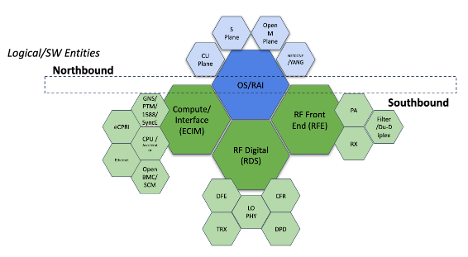
The Evenstar workstream (a strategic initiative within the OCP focused on delivering an Open Radio Unit) leads the RAI initiative in collaboration with Linux Foundation Connectivity and O-RAN industry experts. The rapid evolution of mobile networks has presented both tremendous opportunities and substantial challenges for operators looking to implement advanced radio features. OpenRAN has introduced a modular approach to radio access network (RAN) development, but operators still need help with interoperability and integration issues that slow down deployment and stifle innovation. Within the radio unit (RU), complex and often proprietary interfaces exist between the lower-level hardware components and standardized operating system components, such as the management plane interface. To address these challenges, introducing a Radio Abstraction Interface (RAI) is poised to simplify integration, enable rapid testing, and lay the foundation for locally hosted real-time applications (ruApps) on the RU platform.
Understanding the Current Challenges
The traditional radio network deployment model is complex and fragmented. Operators often find it difficult to integrate new technologies or advanced features due to vendor-specific interfaces and a lack of common standards. This has hindered innovation and limited the ability of non-Tier 1 operators to adopt and deploy new features cost-effectively.
Moreover, as the industry moves toward more intelligent, real-time networks, the demand for radio applications that can run directly on the radio platform has surged. Enter the concept of ruApps—real-time, AI-driven applications that can optimize and adapt radio performance on the fly. However, to unlock these potentials, standardized interfaces and operating environments are needed to abstract the complexities of the underlying radio hardware.
Introducing the Radio Abstraction Interface (RAI)
The RAI aims to be the “driver’s seat” for radio unit control, providing a standardized layer that abstracts away the intricacies of different radio profiles and configurations. This interface is inspired by the success of the Switch Abstraction Interface (SAI) in open networking, which has significantly simplified network integration and interoperability testing (IOT).
RAI will allow operators and developers to:
- Interact with any radio unit through a consistent interface: This simplifies integration and accelerates feature rollouts.
- Decouple software and hardware innovation: By separating radio control from the underlying hardware, the RAI enables the development of software-driven radio innovations without requiring changes to the hardware itself.
- Facilitate the deployment of ruApps: Real-time applications can interact with radio units directly, making optimal decisions based on real-time data.
Enabling ruApps: A New Paradigm for Radio Intelligence
With the RAI implemented, a new class of applications can be developed: ruApps. These applications are designed to run on the radio platform, providing low-latency access to critical radio data and controls. Potential use cases include:
- Dynamic resource allocation: ruApps can adjust resource allocation based on real-time traffic patterns.
- Interference mitigation: AI-powered applications can predict and mitigate interference, ensuring optimal performance.
- Real-time network optimization: ruApps can adapt radio configurations to changing network conditions, enhancing performance in dense urban environments or industrial IoT settings.
- Platform support for rApps/xApps and RuApps– RuApps will bridge the gap between cloud-native and on-premises processing, offering a versatile solution for future AI-driven innovations in the platform.
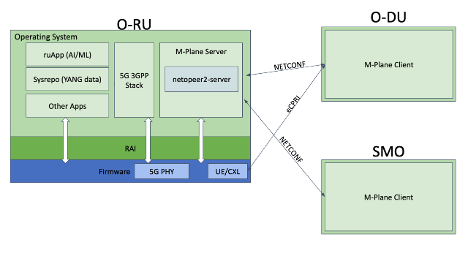
The RAI, along with open hardware platforms, will provide sandbox environments to support the rapid development, testing, and deployment of these applications, enabling faster innovation cycles.
What’s Next?
The Radio Abstraction Interface is a critical step toward realizing the full promise of OpenRAN. By providing a standardized interface that enables seamless integration and rapid ruApp deployment, the RAI will accelerate innovation, lower deployment costs, and foster a more vibrant and competitive ecosystem. This approach empowers operators to leverage advanced radio features and intelligent applications, setting the stage for the next generation of network performance and efficiency. We invite you to join us on this journey. Please take a look at our recent whitepaper here, or sign up for our Evenstar Project mailing list and have your say over the direction of this concept by participating in the project calls every Friday by joining here.
