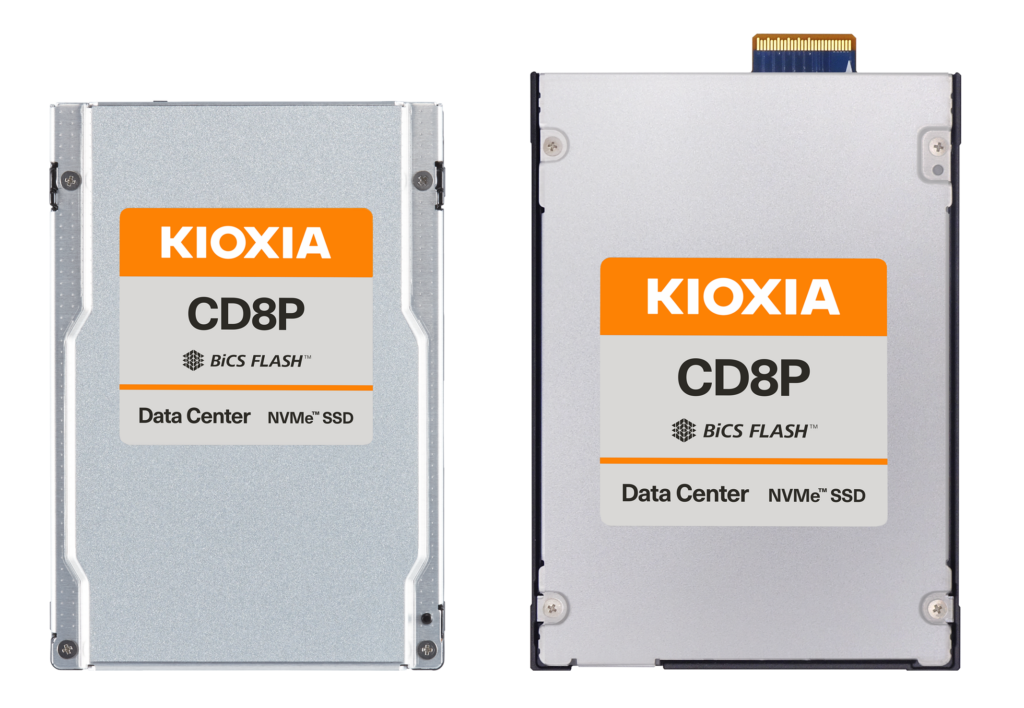
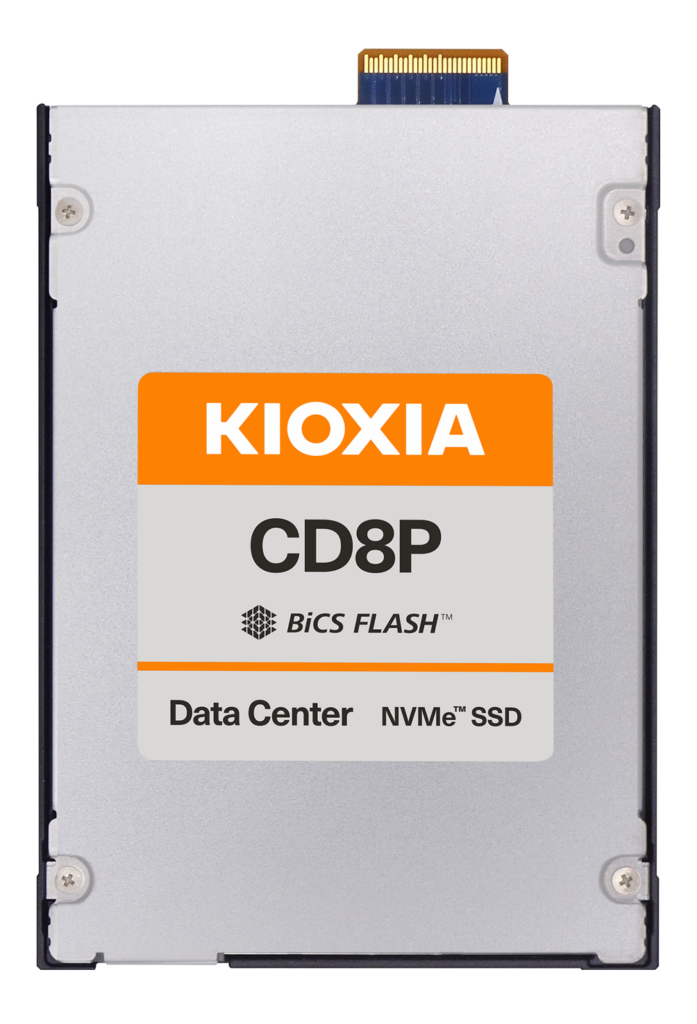
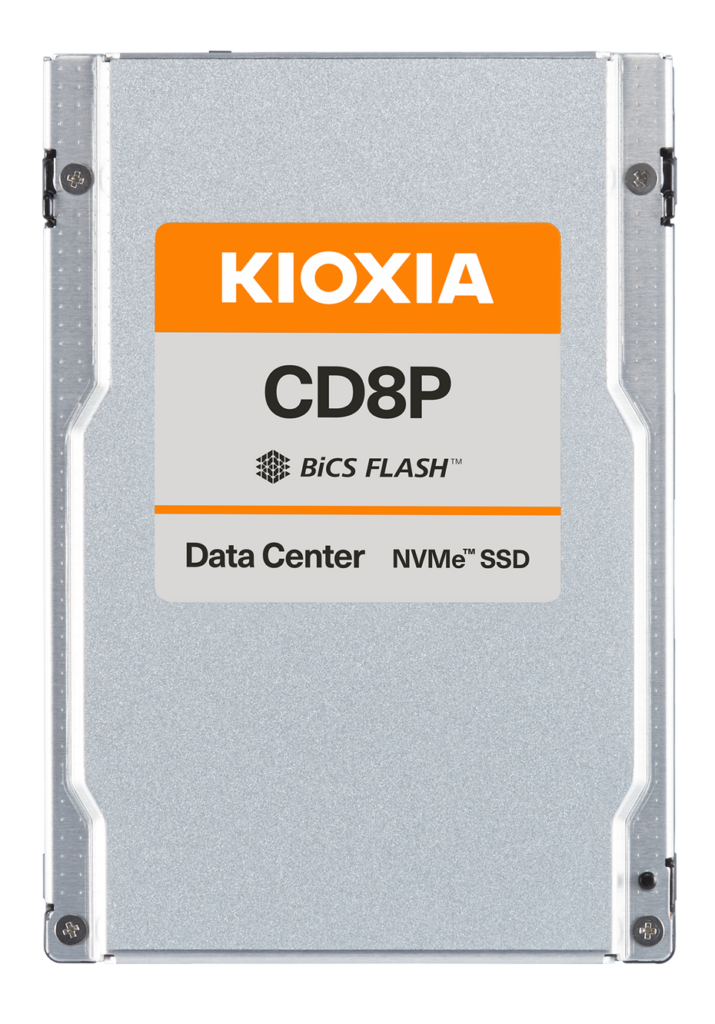
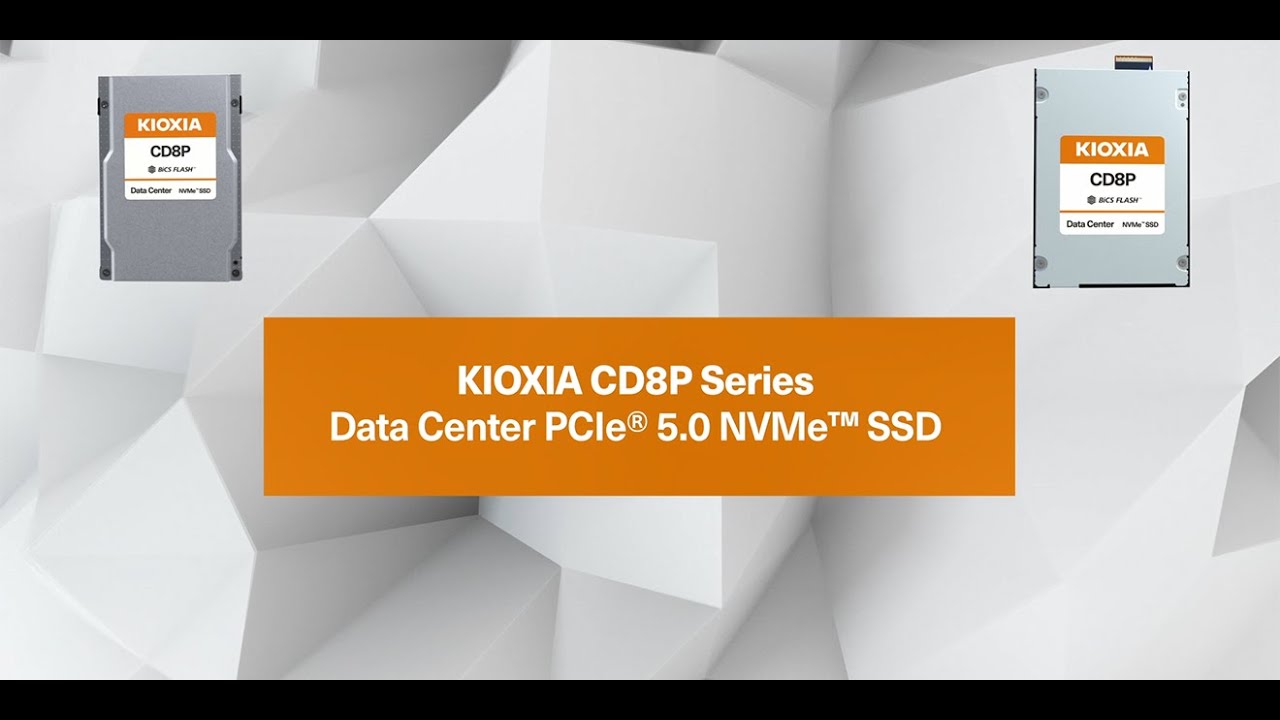
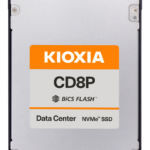
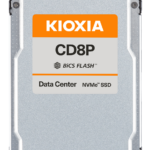
The KIOXIA CD8P-R Series is a read intensive SSD and is optimized to support a broad range of scale-out and cloud applications, including big data/IoT, online transaction processing and virtualization. Built with a PCIe® Gen5 x4 (32 GT/s x4) interface, the CD8P Series SSDs deliver consistent performance up to 2,000K IOPS random read and 400K IOPS random write (KIOXIA CD8P-V Series).
Featuring KIOXIA BiCS FLASH™ generation 5 TLC flash memory, the CD8P Series 2.5-inch form factor SSDs deliver storage capacities up to 30.72 TB and CD8P Series E3.S form factor SSDs deliver storage capacities up to 15.36 TB, making them well-suited for hyperscale data center applications.
Key Features
- Compliant with Open Compute Project Datacenter NVMe™ SSD specification v2.0 support (not all requirements)
- Form factor: (E3.S), 7.5 mm thickness
- Proprietary KIOXIA architecture: controller, firmware and BiCS FLASH™ generation 5 TLC flash memory
- Single-port design, optimized for data center class workloads
- Consistent performance and reliability for demanding 24×7 environments
- Designed for high-density storage deployments
- Power loss protection (PLP) and end-to-end data protection
- Security options: SIE, SED[1][2][3][4]
Key Applications
- Hyperscale
- IoT and big data analytics
- Online transaction processing (OLTP)(transactional and relational databases)
- Virtualized environments
- Streaming media and content delivery networks
____________________________________________________________________________
Product image may represent a design model.
Definition of capacity: KIOXIA Corporation defines a megabyte (MB) as 1,000,000 bytes, a gigabyte (GB) as 1,000,000,000 bytes and a terabyte (TB) as 1,000,000,000,000 bytes. A computer operating system, however, reports storage capacity using powers of 2 for the definition of 1 GB = 2^30 = 1,073,741,824 bytes and therefore shows less storage capacity. Available storage capacity (including examples of various media files) will vary based on file size, formatting, settings, software and operating system, and/or pre-installed software applications, or media content. Actual formatted capacity may vary.
GT/s: Giga Transfers per second.
Read and write speed may vary depending on various factors such as host devices, software (drivers, OS etc.), and read/write conditions.
IOPS: Input Output Per Second (or the number of I/O operations per second).
[1] Sanitize Instant Erase (SIE) and Self-Encrypting Drive (SED) security optional models are available.
[2] SIE optional model supports Crypto Erase, which is a standardized feature defined by the technical committees (SCSI) of INCITS (the International Committee for Information Technology Standards).
[3] SED optional model supports TCG Opal and Ruby SSCs. It has a few unsupported features of TCG Opal SSC. For more details, please make inquiries through “Email” in this page.
[4] Security optional models are not available in all countries due to export and local regulations.
All information provided here is subject to change without prior notice.
PCIe is a registered trademark of PCI-SIG.NVMe is a registered or unregistered mark of NVM Express, Inc. in the United States and other countries. Other company names, product names, and service names may be trademarks of third-party companies.