
Open Compute Tech Summit 2026 Held in Beijing: Decoding the New Frontier of AI Infrastructure, Advancing AIDC Development Through Global Collaboration
View selected slides and comprehensive details
View the Photo Stream on Flickr
Recently, the Open Compute Tech Summit 2026 (OCTC 2026) was held in Beijing. Centered on the next frontier of AI infrastructure, the summit explored how open computing can drive systematic innovation in AI infrastructure amid the exponential growth of token generation driven by trillion-parameter foundation models and multi-agent AI systems. Discussions focused on overcoming key technical challenges in high-speed interconnects, power architecture, liquid cooling, and open system design. As next-generation AI data centers evolve into increasingly complex system-level engineering projects, global open collaboration platforms are accelerating the high-quality development of AI data centers (AIDC) through shared standards, open architectures, and coordinated supply chains.
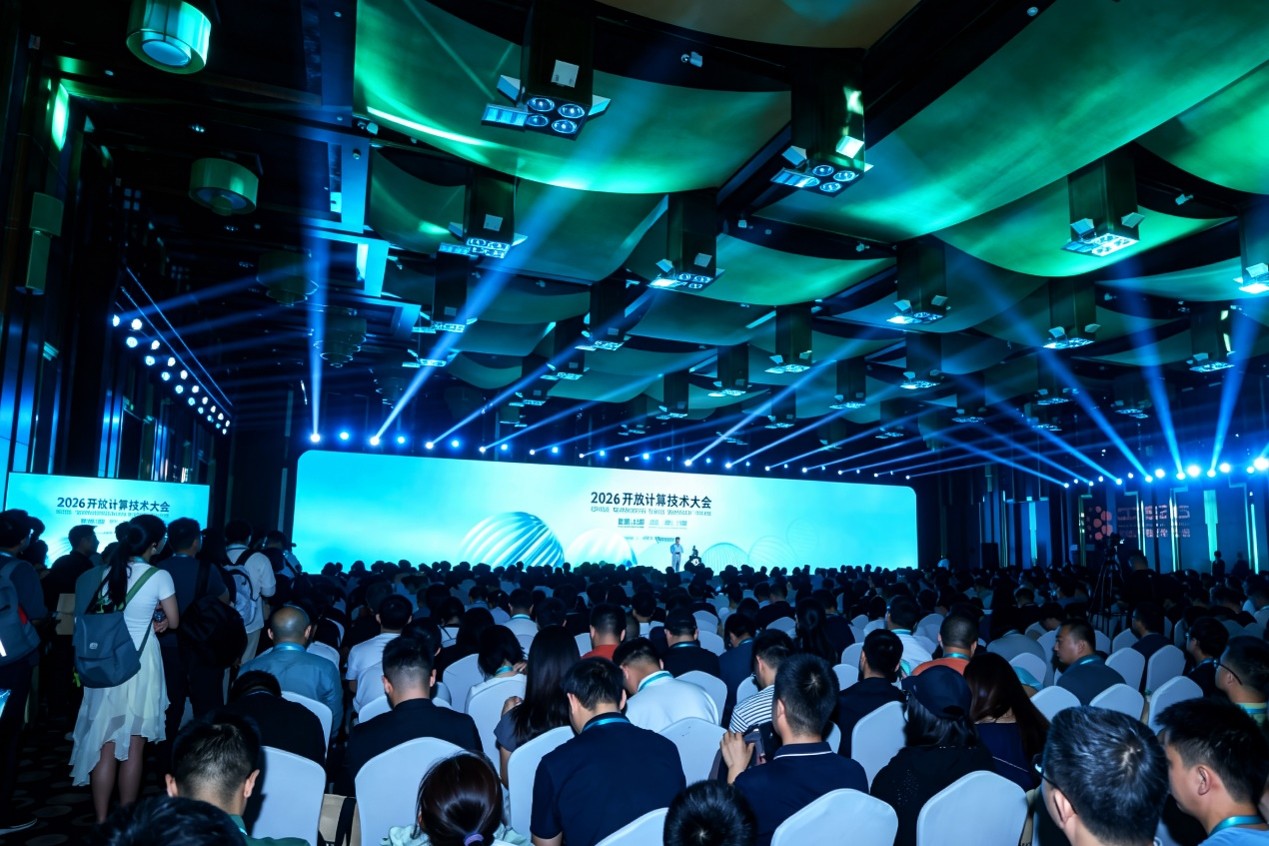
Jointly organized by the Open Compute Project (OCP) and the Open Compute Technology Committee (OCTC) of China Electronics Standardization Association, the Open Compute Tech Summit is China’s largest and most influential annual event dedicated to the open computing ecosystem. This year’s summit brought together leading global open organizations, including OCP, OCTC, SPEC, the CXL Consortium, the UALink Consortium, the UCIe Consortium, and the Firmware Technology Innovation Alliance, alongside more than 50 leading AI companies and full-stack IT supply chain partners, including NVIDIA, Samsung, ByteDance, Alibaba Cloud, Baidu, Inspur Information, China Mobile, Luxshare, Qinghong Electronics, BPS, Flex, and AVIC Optoelectronics. More than 2,000 community members, researchers, technology experts, developers, and industry representatives attended the event.
The summit featured one keynote forum and six technical forums covering Data Center Infrastructure, Compute-Power Coordination, Sustainable Computing, Open System Design, GW-Scale Open AIDC, and Intelligent Computing Firmware Development. Nearly 100 in-depth technical sessions addressed cutting-edge topics including SuperPods, high-speed interconnects, compute-power coordination, liquid cooling, and open firmware. During the event, the Global Open Computing Top 10 Innovation Awards were announced, while a 2,000-square-meter exhibition showcased nearly 100 flagship AI infrastructure products and solutions across the entire industry value chain, highlighting the latest innovations within the open computing ecosystem.
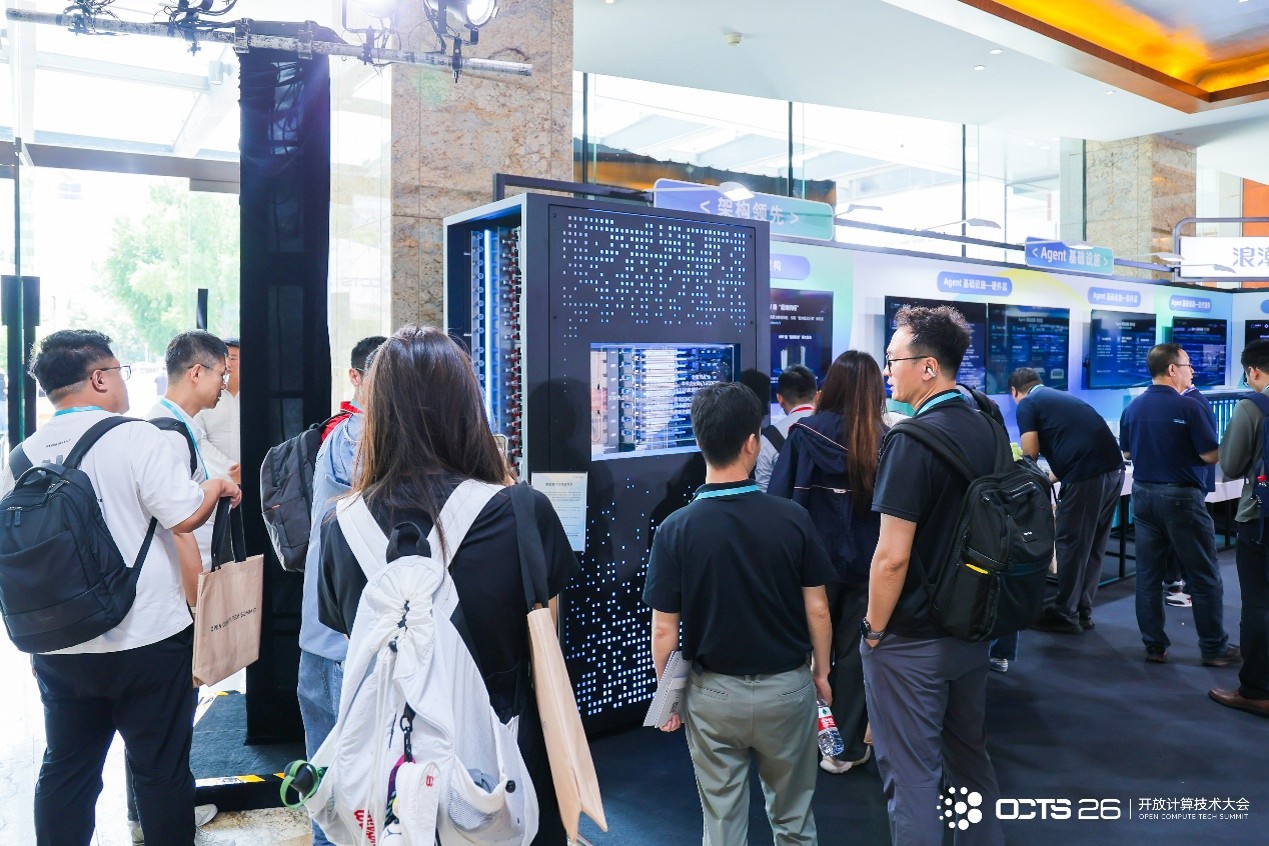
First-Ever GW-Scale Open AIDC Blueprint Technical Report Released
Download the GW-Scale Open AIDC Blueprint Technical Report
As model sizes continue to grow and Agentic AI enters large-scale commercial deployment, bringing massive long-context workloads and high-frequency token interactions, GW-scale AI data centers have become essential infrastructure for next-generation foundation model training and AI agent inference. Planning, building, and operating GW-scale AIDCs have evolved into large-scale systems engineering projects spanning power infrastructure, thermal management, networking, and compute scheduling. The industry urgently requires a unified, practical, and globally compatible open framework to guide the planning, construction, and long-term operation of GW-scale AI infrastructure.
During the summit, the industry’s first GW-Scale Open AIDC Blueprint Technical Report was officially released. Designed around global GW-scale AI infrastructure requirements and future renewable energy integration, the report establishes five foundational technology pillars—compute, high-speed interconnects, storage, high-power delivery, and full-domain liquid cooling—and defines a complete open architecture, hardware specifications, and implementation roadmap for GW-scale AI data centers.
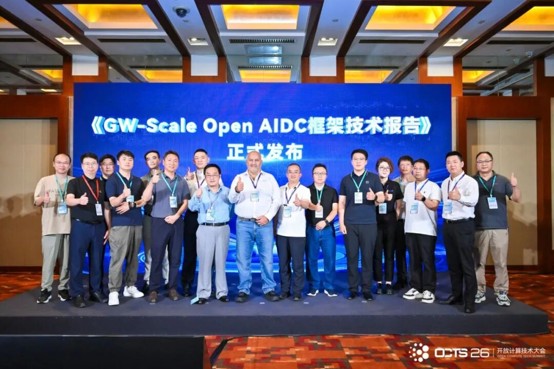
George Tchaparian, CEO of the OCP Foundation, noted that AI is driving data centers worldwide toward system-level transformation. Open data centers have always been central to OCP’s vision. OCP aims to build a complete infrastructure ecosystem spanning Chip-to-Grid and IT-to-OT through open specifications, community collaboration, and standardized engineering practices, enabling faster innovation, greater infrastructure efficiency, and broader adoption of interoperable, multi-vendor solutions.
As GW-scale AI infrastructure evolves from optimizing individual devices or clusters toward campus- and regional-scale system engineering, OCTC will deepen collaboration with OCP through dedicated working groups focused on GW-scale Open AIDC, AI networking and high-speed interconnects, and edge-cloud intelligent computing systems. Together, they will align China’s AI data center engineering practices with global open computing standards and accelerate the development of an international ecosystem for GW-scale AI infrastructure.
Industry Leaders Discuss AIDC Evolution in the Agentic AI Era
With the rapid advancement of Agentic AI, AI workloads are evolving beyond traditional model training and inference into complex systems characterized by multi-agent collaboration, long-context interactions, tool invocation, memory management, and continuous task execution. Infrastructure challenges are no longer limited to increasing peak computing performance; instead, they focus on enabling coordinated operation across compute, storage, networking, power delivery, cooling, and system scheduling to sustain high-throughput, low-latency, and energy-efficient token production. During the keynote forum, more than ten industry leaders shared insights and innovations spanning system architecture, high-speed interconnects, and integrated compute-power-thermal design.
From a system architecture perspective, AI infrastructure is evolving from GPU-centric computing toward heterogeneous systems optimized for Agentic AI workloads. Chen Jian, Chief Cloud Server Architect at Alibaba Cloud, noted that future inference performance bottlenecks will depend less on individual GPU performance and more on the overall coordination among CPUs, GPUs, hierarchical memory, and high-speed networking. Tian Seong-Hoon, Vice President and Head of Solution Development at Samsung Electronics, highlighted that AI agents will dramatically increase KV cache capacity requirements, making it increasingly difficult for HBM and DRAM alone to satisfy performance, capacity, and long-term TCO simultaneously. Zhao Shuai, Vice President of Inspur Information, observed that large-scale concurrent AI agents and real-time collaboration place entirely new demands on compute architecture, interconnect networks, and system scheduling. To meet these requirements, open heterogeneous SuperPods and native liquid-cooled CPU rack-scale servers will evolve together. Gao Xiaojun, Server Architect at ByteDance, shared practical experience from hyperscale AI deployments, predicting that XPU density per rack, chip power consumption, and cluster interconnect bandwidth may increase several-fold over the coming years, making modular, horizontally scalable, and standardized AI Racks a critical infrastructure platform for future AI services.
High-speed interconnects are also becoming a decisive factor in unlocking AI cluster efficiency. From copper to optical interconnects and from physical links to open protocols, networking is emerging as a core component of AI infrastructure. Chris Petersen, Board Member of both the UALink Consortium and the CXL Consortium, noted that collective communication demands generated by Mixture-of-Experts (MoE) models and massive XPU clusters have become a primary bottleneck to effective compute utilization. At the physical layer, copper and optical interconnects are evolving as complementary technologies optimized for different transmission distances, power budgets, density requirements, and operational scenarios. Chen Xuanhao, Product Director at Qinghong Electronics, explained that cable backplanes, near-chip cables, and co-packaged copper interconnects will continue serving as the primary Scale-Up connectivity solution for short-distance, high-density XPU deployments within racks. Peng Xiaowei, Optical Product Manager at Luxshare, added that integrated optical-electrical-thermal design will become a key direction for overcoming communication bottlenecks in future large-scale AI clusters.
Power delivery and thermal management are also undergoing fundamental transformation as AI chip power consumption and rack density continue to rise. Supporting Agentic AI requires moving beyond the traditional approach of designing compute first and adding power and cooling afterward. Instead, compute, power delivery, cooling, and campus energy infrastructure must be co-designed from the outset. Xie Wei, Director of Power Supply R&D and Product Management at Flex, emphasized that increasingly dense AI racks require significant improvements in power efficiency, space utilization, and thermal management, with 800V high-voltage DC distribution and near-load power delivery emerging as key technologies for next-generation AI data centers. At the chip and board level, He Jiajin, Senior Product Marketing Manager for High-Performance Computing at BPS, noted that future XPUs exceeding 3,000 watts will demand substantial advances in power semiconductors, packaging technologies, and digital power control algorithms. Alongside innovations in power delivery, cooling architectures are also evolving. Li Jinbao, Product Manager at AVIC Optoelectronics, predicted that native liquid cooling will become the foundation of future high-density AI infrastructure as XPU power consumption and rack-level power density continue to increase.
Six Technical Forums Explore the Next Frontier of AI Infrastructure
From high-speed interconnects, silicon photonic networking, and high-voltage DC energy storage to native liquid cooling and next-generation memory-compute interconnect architectures, the summit’s six technical forums provided a comprehensive exploration of cutting-edge AI infrastructure technologies, highlighting the latest innovations across networking, power delivery, cooling, and system architecture.
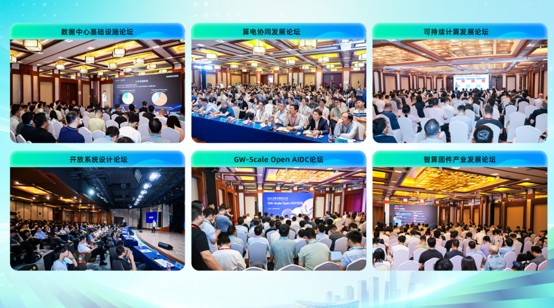
The Data Center Infrastructure Forum examined the evolution of AI data center interconnect technologies, covering topics such as Retimers, Active Electrical Cables (AEC), silicon photonic Optical Circuit Switching (OCS), 448G high-speed copper cables, and highly available networking for 10,000-GPU clusters. Discussions focused on overcoming signal integrity, transmission distance, insertion loss, and network congestion challenges.
The Compute-Power Coordination Forum explored the complete redesign of next-generation power architectures, including AI-assisted parameter optimization for power electronic converters, highly integrated Intermediate Bus Converters (IBC), vertical power delivery architectures, and the evolution toward 800V DC power systems for MW-class AI racks. Together, presentations from academia and industry outlined the future roadmap for AI data center power infrastructure.
The Sustainable Computing Forum focused on thermal management and operational efficiency for GW-scale AI data centers. Sessions covered innovations in two-phase liquid cooling and forward-looking native liquid cooling architectures while also exploring rack-level management enabled by open firmware technologies to improve orchestration and infrastructure coordination.
The Open System Design Forum examined how Agentic AI is reshaping computing infrastructure, with discussions centered on open technologies including CXL, UALink, and DASE, providing foundational support for next-generation multi-agent AI systems.
The GW-Scale Open AIDC Forum bridged global open standards with practical engineering experience, exploring how GW-scale AI data centers are evolving from individual hardware innovations toward fully integrated system architectures. Topics included SuperPods, prefabricated AI factories, native liquid cooling, and AI networking, showcasing China’s latest innovations in system architecture, rapid deployment, and supply chain collaboration while contributing scalable and validated engineering practices to the global open computing community.
The Intelligent Computing Firmware Development Forum focused on server management technologies, covering AI-enabled Baseboard Management Controllers (BMC), OpenBMC ecosystem development, RAS API standardization, trusted firmware, lightweight firmware architectures, AI-driven fault diagnosis, and firmware standards. Together, these initiatives aim to build a secure, open, and collaborative intelligent infrastructure management ecosystem.
Looking ahead, the value of open computing extends far beyond open hardware specifications. Through global collaboration, it transforms the complex engineering challenges of building large-scale AI infrastructure into shared, verifiable, and reusable industry standards. As AI infrastructure shifts from competition based on individual computing capacity toward full-stack system optimization, an open ecosystem will become the driving force behind the continued evolution of next-generation AI infrastructure.