


Description:
Energy storage is rapidly becoming a strategic component of modern data center infrastructure. Historically deployed primarily for short-term backup power, energy storage systems are now being evaluated across multiple layers of the data center ecosystem—from utility-scale battery installations that support renewable integration and grid resiliency, to facility-level power infrastructure balancing on-site generation, demand, and power quality, to distributed rack-level systems operating alongside compute.
As energy storage assumes expanded operational roles and moves closer to critical IT infrastructure, safety is becoming an increasingly important consideration. Recent updates to UL 9540A, UL 9540, and NFPA 855 (2026 Edition) reflect evolving expectations around thermal behavior, failure propagation, system integration, and real-world operating conditions. These evolving standards are reshaping how operators evaluate, deploy, and manage energy storage systems throughout the data center.
Several industry trends are accelerating this shift. AI-driven growth is increasing power demand, driving higher rack power densities, and creating new challenges for infrastructure deployment and grid capacity planning. At the same time, operators are pursuing sustainability goals focused on energy efficiency, lifecycle impacts, renewable energy integration, and responsible battery sourcing, manufacturing, and end-of-life management.
These trends increasingly converge at the rack level. Emerging AI architectures are introducing highly dynamic power profiles characterized by rapid load fluctuations and synchronized GPU activity. In response, the industry is exploring new approaches to energy storage deployment, including in-rack and sidecar architectures positioned closer to the load. Emerging power delivery strategies, including higher-voltage rack architectures, are further expanding the role of energy storage in next-generation compute environments.
This webinar brings together perspectives from data center, energy storage, and safety experts to examine how evolving standards, sustainability initiatives, and AI workload requirements are reshaping energy storage across the modern data center. Attendees will gain a practical framework for evaluating energy storage in modern AI data centers, with a focus on the safety, sustainability, and performance requirements driving next-generation rack power architectures.
Who should attend?
- Hyperscale data center power and safety engineers
- Server, rack, and power system OEMs
- Data center architects
- Data center electrical engineers
- OCP power, hardware, and sustainability contributors
- Battery, energy storage, and safety compliance engineers
What will you learn?
- The key industry trends driving increased adoption of energy storage in AI data centers
- How evolving standards (UL 9540A, NFPA 855-2026) are shaping energy storage system design, deployment, and validation
- Why increased on-site generation use, AI workloads, GPU power transients, and increasing rack densities are driving new requirements for power delivery and energy storage closer to compute
- How sustainability considerations—including lifecycle impact, recyclability, responsible sourcing, and battery passport initiatives—are influencing energy storage decisions
- What to consider when evaluating energy storage technologies for future AI infrastructure
Please contact [email protected] with any inquiries for ZincFive.
Speakers:

James Kelly
VP Market Intelligence and Innovation, Open Compute Project Foundation (OCP)
James joined the OCP Foundation staff in 2024 as VP Market Intelligence and Innovation, working with technology leaders in the community and augmenting the foundation’s directional strategy, innovation efforts and marketing. His contributions to the OCP proceed from over two decades of experience in technology research, engineering, product management and marketing.

Jay Dietrich
Research Director, Sustainability and Energy, Uptime Institute
Jay Dietrich is a Research Director of Energy and Sustainability working in the Uptime Intelligence unit. He monitors and tracks developments in energy generation and transmission, energy efficiency and sustainability standards, regulations, technology, and program offerings. He evaluates the intersection of these energy and sustainability elements with data center operations to advise data center operators on the elements of a consequential sustainability strategy that meets customer and regulatory requirements and delivers meaningful business and environment improvements. He has published an extensive list of Updates, Reports, and an ongoing series of BrightTalk webinars on energy and sustainability topics.
Mr. Dietrich has a Master of Science in Environmental Engineering from Purdue University and a Bachelor of Science degree in Civil Engineering from Valparaiso University. Mr. Dietrich was an IBM Distinguished Engineer and a Registered Professional Engineer in Vermont.

Jake Whitacre
Senior Product Manager, ZincFive
Jake Whitacre is a Sr Product Manager at ZincFive, responsible for strategy and product development for advanced energy storage solutions supporting AI, cloud, and hyperscale data center infrastructure. He combines an engineering background, product leadership experience, and an MBA from Northwestern University’s Kellogg School of Management to translate emerging technologies into customer-focused solutions.
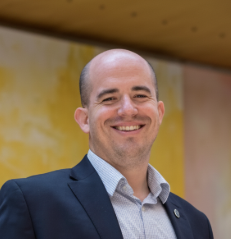
Dr. Matthew Raiford
Senior Technical Director, CBI
Matthew Raiford earned his Ph. D. in Chemistry from University of Texas at Austin in 2014. Afterward he started as process engineer at RSR Technologies where he spent five years working on materials development in active materials for lead batteries. For the past seven years at CBI, he manages the ongoing suite of projects in the technical program and provides support and expertise for standards, government projects, and communication efforts in Europe and North America.